Consumer Education
Consumer education involves empowering individuals with the knowledge and skills necessary to make informed decisions about real estate and their role as a homeowner, condo owner, landlord, tenant, or rural property owner.
Consumer Education
Consumer education involves empowering individuals with the knowledge and skills necessary to make informed decisions about real estate and their role as a homeowner, condo owner, landlord, tenant, or rural property owner.
RCADE is a community based development that operates on two levels. On a local level, it is a community based enterprise that supports learning, innovation, and creativity. On a regional level, it is a way to direct resources and expertise to develop shared use resources, best use practices, and a regional approach to economic development. Learning-focused institutions and organizations in the town of Pincher Creek will collaborate to design Pincher Creek RCADE (Regional Centres for Arts, Design & Entrepreneurship), a sustainable and scalable system for building community capacity for learning, creativity and innovation. Design objectives are to support communities in southwest Alberta in developing innovation and entrepreneurship as core competencies, and to support residents in fulfilling their creative potential.
The Westman Centre for Real Estate Studies at the Haskayne School of Business will link global real estate, urban economics research and teaching relevant to the Calgary marketplace with outreach to industry and the community. In addition to educating the next generation of real estate leaders, we will conduct innovative research and create a platform for discussion within the industry.
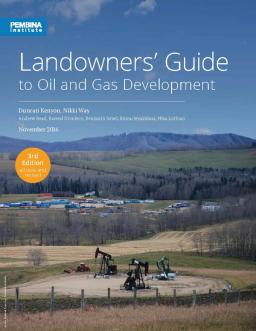
Alberta’s energy development landscape is a maze of regulations and complex relationships. The Landowners’ Guide to Oil and Gas Development provides advice on negotiating the best relationship possible between industry representatives who live and breathe this subject matter and property owners or communities that may be facing it for the first time. It also provides accessible advice on some of these complex questions:
SpaceFinder Alberta will strengthen the creative, non-profit and small business sectors with an online marketplace for hourly, daily, weekly and longer-term rentals. Existing space will go underused less often. A data source for metrics reports to inform policy making and project development, SpaceFinder Alberta is free to list and free to search.
In the following pages, you’ll find a brief overview of some of the information landowners need about oil and gas development on or near their land. There are hundreds of different questions — and answers — with complex regulations and information to digest. The following questions are just a sample.
Edmontonspacefinder.ca, launched in 2010, is an online resource, to post or find, non-profit and community space; to assist renters find venues and venues to find their renters. Challenges with the original proprietary programming language make alterations or improvements to the current Edmonton SpaceFinder difficult and ultimately not possible. New York-based Fractured Atlas has the desired platform to replace the existing Edmonton SpaceFinder that is now out of date in its capabilities.
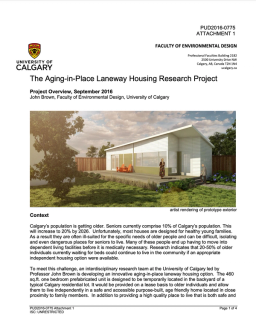
Calgary’s population is getting older. Seniors currently comprise 10% of Calgary’s population. This will increase to 20% by 2026. Unfortunately, most houses are designed for healthy young families. As a result, they are often ill-suited for the specific needs of older people and can be difficult, isolating, and even dangerous places for seniors to live. Many of these people end up having to move into dependent living facilities before it is medically necessary. Research indicates that 20-50% of older individuals currently waiting for beds could continue to live in the community if an appropriate independent housing option were available.
This project will increase the knowledge of Albertans with regards to their rights and obligations under the condominium law. Phase One will result in plain language resources, including a website, what will make consumers aware of their rights and obligations under the law, and increase the capacity of consumers to enforce those rights by enhancing access to accurate legal information and community resources.
This is a project to engage and build the capacity of community stakeholders in AB to design and collaboratively implement Community Energy Plans (CEPs) based on the principles of Integrated Community Energy Solutions (ICES), which offer significantly more resilient, healthy and sustainable communities. The objectives are to: assess the situation in AB related to CEPs; determine the most effective approach to supporting AB communities in this process; and to facilitate engagement and collaboration between community stakeholders and the real estate sector.
The funding extension would allow us to continue to help Albertans understand housing law by providing easy to understand legal information through the website, resources and workshops. Our services are timely, practical and available across the province, which means we provide help to rural people and to vulnerable audiences who do not have other housing or legal help available to them.
Toronto Atmospheric Fund (TAF) developed the Green Condo Champions initiative to provide condominium directors with strategic, technical and financial knowledge and support needed to advance energy efficiency retrofits in the Toronto market. With a growing condo market in Alberta and changes to Alberta’s Condominium Property Act scheduled for 2014, it is an opportune time to bring this program to Alberta with the goal of helping condo owners save money and reduce their impact on the environment. This project will draw on TAF’s experience existing materials, and on Pembina’s knowledge of the Alberta market and energy efficiency opportunity to support condominiums and create a guide and network of experts that can promote and facilitate successful energy efficiency upgrades in Alberta’s condo sector.