Consumer Education
Consumer education involves empowering individuals with the knowledge and skills necessary to make informed decisions about real estate and their role as a homeowner, condo owner, landlord, tenant, or rural property owner.
Consumer Education
Consumer education involves empowering individuals with the knowledge and skills necessary to make informed decisions about real estate and their role as a homeowner, condo owner, landlord, tenant, or rural property owner.
The School of Public Policy continues its research into the growing problem of orphaned and abandoned oil & gas wells. The project will advance research on effective and equitable policy approaches to address public and private challenges from these wells.
This project will research the second-hand housing market will seek to improve understanding of the impacts and trends of home sharing services such as Airbnb, particularly on rental and housing markets, with a focus on Calgary and other cities in Alberta. Specifically, the project will seek to understand the main impacts of home sharing in Calgary and factors influencing these impacts; what it means for home ownership and affordability and community characteristics; what are the trends and what might the market and its effects look like in the future; what are similar cities doing to address related issues; and what are policy options for the City of Calgary to develop a suitable framework for regulating the market and how might such a framework be implemented?
The Residential Tenancies Legal Information Program is the best source of easy to understand, accessible and accurate legal information about landlord and tenant matters in Alberta. The program provides vital information to Albertans online, in print and in person.
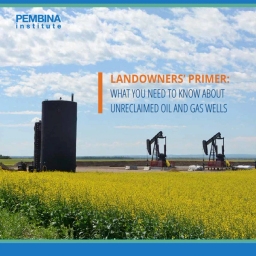
With support from the Alberta Real Estate Foundation, the Pembina Institute has published the Landowner’s primer: what you need to know about unreclaimed oil and gas wells to help those who are most impacted. Designed as a complementary follow up to our 2016 publication, the Landowners’ Guide to Oil and Gas Development , this primer addresses questions and examines problems landowners face when dealing with operators who are under financial strain and still have unreclaimed oil and gas infrastructure on landowners’ property.
The forested areas on lands are often overlooked for their values by many, but these forests and other treed areas often extremely valuable, holding values both in their ability to be sold as a product, and through natural functions that trees can provide while living. This document seeks to introduce you to major values and to help realise the potential that is in these areas.
The federal government has released details on the Clean Fuel Standard (CFS), a regulation that will require all fossil fuel suppliers to reduce the carbon content of fuel or purchase offset credits as of 2022. The CFS applies not only to transportation fuels (as has been done in BC and California) but also – in a global first – to fuels used in industry and in buildings. This project will analyse what the new regulation means for the building sector, industry, consumers and residents, in terms of both cost and complications.
With our New Energy Economy project, we will reflect investments (and the associated jobs) in energy efficiency, renewables and clean tech already happening within Albertan communities, create a uniquely Albertan energy-climate narrative that appreciates a diversity of perspectives, and build the skills and capacity of Albertans to effectively communicate about energy and climate. The result will be a discourse surrounding energy and climate that is less polarized and more informed.
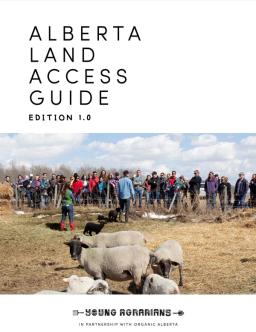
The purpose of this guide is to support new and landless farmers to choose a path toward accessing land. In researching and writing this guide, the driving question has been: how have new farmers secured land? There are several different options to consider from leasing and purchasing to community farms and incubator plots – each with its own set of pros and cons.
The primary goal of this guide is to provide design recommendations – derived from evidence-based scientific literature – that may enhance mentalwellbeing. This guide hopes to be a benchmark to allow affordable housing stakeholders to consider the psychological impact of certain design elements. This is achieved by considering a balance between the cost efficiency of the design elements, and the benefit as supported by peer-reviewed psychological studies.
Canada contains many radon gas-generating regions and, because we have constructed population centres across all of them, radon is the primary cause of lung cancer in 10,000- 40,000 Canadians per decade. We have conducted detailed radon gas analysis of 11,000+ homes spread across Alberta and Saskatchewan, finding that 1 in 6 contain hazardous amounts of radon with newer homes in many regions (but not all) having much higher total radon. We have revealed an unknown “X factor” within environmental design practice across regions that is a major contributor to radon exposure, and our goal now is to understand this and develop solutions to protect the population. We aim to (i) identify modifiable behaviors and environmental design practices influencing chronic radon exposure in our changing world and (ii) define engineering and community intervention solutions applicable within the Canadian context to eliminate radon as a source of cancer in the future.
The Residential Tenancies Legal Information Program is the best source of easy to understand, accessible and accurate legal information about landlord and tenant matters in Alberta. This program provides vital information to Albertans online, in print and in person. Funding of this program will enable CPLEA to continue reaching and responding to the needs of over 700,000 resource users (and growing) per year.
Through an innovative approach, the ARDN’s Sustainable Housing Initiative (SHI) is creating the first ever building standard for developing affordable housing, which will act as a step by step guide for groups looking to replicate it. The creation of an affordable housing standard will not only redefine how affordable housing is developed and built, but will redefine how the broader community perceives new affordable developments. With the support of AREF, this new standard will be built on knowledge gathered through research that explores and tests how to incorporate the psychology of aesthetics when building affordable housing. The key goal is to improve the mental and physical health of tenants through the incorporation of the psychology of aesthetics.