October 16, 2026
Rebuilding Jasper: How AREF Funding Is Helping a Community Build Back Better
Cam Jenkins has been a real estate broker in Jasper, Alberta for 24 years. For most of that time, he knew the Alberta Real Estate Foundation existed. He knew about the trust accounts and knew the interest went somewhere.
But he'd never seen it at work.
"I knew of the Alberta Real Estate Foundation. I knew some of the funding and some of the education that was done," Cam says. "But never have I actually seen it in action, nor have I met anybody that's actually seen it in action."
That changed after the July 2024 wildfire.
The fire destroyed over 300 structures in Jasper. More than 600 housing units were lost, roughly a third of the town's housing stock. In a community of about 5,000 people, 2,500 were displaced. For a town that already had a 0% vacancy rate for decades, and a calculated housing deficit of 759 units before the fire, it was a crisis on top of a crisis.
Cam felt it directly. Before the fire, he was Jasper's largest property manager. His company managed homes for 14% of the town's population. After the fire, he lost 85% of his property management business. "What are you going to sell?" he says. "Smoldering piles of rubble that are behind a blue fence?"
In June 2025, Cam took on a new role as the Municipal Housing Coordinator for the Municipality of Jasper. That's when he started working alongside the Jasper Housing Enablement Initiative, a $250,000 AREF-funded project delivered by mddl in partnership with the municipality.
What the Jasper Housing Enablement Initiative Does
Jasper's housing challenges are different from most Alberta communities. The town boundary is federally legislated under the National Park Act. You can't expand outward. Parks Canada controls land use and permitting. And a tourism-driven economy adds seasonal pressure that most towns don't face.
Before the fire, development was only adding an average of 26 units per year to the housing supply. Permit approval times stretched to 40 business days. And there were very few tools or resources to help homeowners, small-scale developers, or builders understand what they could build and how to get it approved.
mddl brought a GIS-based tool that changes everything. Residents can look up their property, see what's possible under current zoning, view pre-approved housing designs, and understand the cost and financing options. The designs are compliant with Parks Canada requirements, so when a permit application goes in, it's not the first time the approval team has seen it. That cuts wait times significantly.
"This is where mddl has been really good," Cam says, "in that they've been able to come up with suites and designs for secondary suites or garage suites that are compliant and that Parks Canada is now familiar with. So when it comes time to permit, this isn't like, oh, I've never seen this before."
The municipality and Parks Canada have already reduced permit approval times from 40 business days to about two weeks. With the pre-approved fast-track designs, Cam says that could come down to five business days.
What people are building
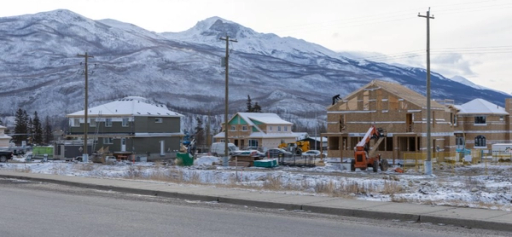
The rebuild is about more than replacing what was lost. As of April 2026, 212 fire-damaged properties have started the rebuild process. 77 are actively under construction. 18 homes are completed. And 207 net new units are in the pipeline, units that didn't exist before.
Cam says people are rethinking what they build. Families who lost multiple homes are pooling resources and building intergenerational housing. Homeowners who never planned to be developers are adding secondary suites and garage suites so they can provide housing for neighbours, friends, or their own kids.
The accessory dwelling unit incentive program expected 30 applications over three years. In nine months, Cam worked on 85.
"To every one of those 85 people, they're so thankful for the opportunity to be able to provide for somebody else," Cam says.
The new units are a big improvement over what existed before. "They're big, they're bright, they're beautiful, they've got nine-foot ceilings," Cam says. "You don't feel like you're living in a basement suite. And everything's new."
Why this matters for real estate professionals
Cam knows the conversation about trust account interest.He knows some brokers feel that money should stay with their brokerage.He's been on that side of the table for most of his career.
His response is direct. "When you take 7,000 brokerages across the province of Alberta and you pool those funds, just think of the good that is happening. The programs that the Alberta Real Estate Foundation is supporting and advocating for, and how many more people it's affecting in a really positive way."
He puts it simply. "You've got to think a little bit bigger than yourself. We've got something here that can empower way more people than your bank account."
After 24 years, Cam has seen what the Foundation does when it shows up in your community. "After all these years, this is what happens on the good side of things."
Leanne Pelletier, the Municipal Housing Manager for Jasper, calls the rebuild "the shiny little treasure that we found in the rubble and the ash." Instead of rebuilding the same housing system that struggled before, the community is building one that works.
"The rebuild isn't just about replacing what was lost," Leanne says. "We've made a conscious decision to avoid recreating the same housing crisis that existed pre-fire."
The Alberta Real Estate Foundation invested $250,000 in the Jasper Housing Enablement Initiative through mddl and the Municipality of Jasper. To date, the Foundation has invested more than $35 million into over 900 projects across the province. All funded through interest earned on consumer deposits held in broker trust accounts.
Similar News