June 23, 2026
2026 Summer Investment Grants
By Alberta Real Estate Foundation

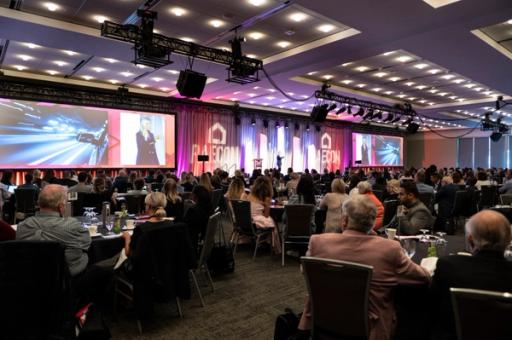
In June, the Foundation's Board of Governors met to hear from the applicants to our Investment Grant program and award funds.
We awarded $1,905,000 to nine incredible projects that will uplift the industry and benefit communities across the province. Check out our latest Investment Grant recipients and learn about their projects below:
Westman Centre for Real Estate Studies: Advancing Real Estate Education
Organization: University of Calgary, Haskayne School of Business
Grant amount: $130,000
The Westman Centre for Real Estate Studies at the Haskayne School of Business is expanding applied learning and industry engagement to prepare the next generation of real estate professionals in Alberta.
With support from the Alberta Real Estate Foundation, the project will sustain and grow the Excel Real Estate Financial Modelling Program, delivered in partnership with the Urban Land Institute, equipping students with practical skills in financial modelling, valuation and investment analysis. Funding will also support the Future of Real Estate Breakfast Series, which convenes industry leaders, students and community stakeholders to explore issues shaping Alberta’s built environment, along with academic input to help curate relevant research, guide topic and speaker selection and identify opportunities for collaboration between Haskayne and the School of Architecture, Planning and Landscape focused on shared experiential learning for students.
Advancing Entry-to-Practice Professional Standards in Alberta’s Mortgage Sector Through Applied Education Reform
Organization: Alberta Mortgage Brokers Association
Grant amount: $250,000
AMBA is modernizing its MAP, the mandatory licensing education for new mortgage professionals in Alberta. Each year, hundreds of Albertans complete MAP before entering practice across the province in urban and rural communities.
This project will introduce applied-learning tools—including case-based video simulations, visual modeling of mortgage transactions, and structured decision-making exercises—to help new professionals better understand regulatory requirements, ethical responsibilities, and complex mortgage products in real-world lending scenarios and evolving lending environments.
By strengthening entry-to-practice education, the initiative will help ensure mortgage professionals are better prepared to navigate complex transactions, support informed borrowing decisions, and uphold high professional standards that protect Alberta consumers and strengthen confidence in the mortgage marketplace while promoting responsible lending and transparent mortgage advice.
REDI2Build Alberta
Organization: Rural Development Network
Grant amount: $225,000
REDI2Build Alberta is a province-wide initiative designed to accelerate housing delivery by bridging the gap between planning policy and real-world development.
Led by RDN in partnership with V3 Companies of Canada, the project introduces a standardized, GIS-based Land Readiness Index (LRI) to assess whether land is truly ready for housing. It is paired with a practical implementation playbook that helps municipalities activate sites, align funding, and advance viable projects. Through pilot testing, training, and collaboration with the development sector, REDI2Build Alberta equips municipalities and industry with clear, data-driven tools to unlock development-ready land and bring housing to market faster.
Universal Home Score: Enhancing Aging-in-Place Readiness in Alberta Real Estate
Organization: University of Alberta, Faculty of Engineering - Civil and Environmental Engineering Dept
Grant amount: $150,000
This project develops the Universal Home Scoring (UHS) framework, a data-driven tool that evaluates how well homes support aging in place. Using AI to analyze real estate listing photos, floor plans, and descriptions, the toolkit will rate properties based on accessibility and adaptability features such as step-free entry, single-level living, and retrofit potential.
Developed in partnership with the REALTORS Association of Edmonton, Landmark Homes, and the Glenrose Hospital Foundation, the project combines real-world data, construction expertise, and clinical insights. The UHS will help real estate professionals and families make better housing decisions, improve matching between seniors and suitable homes, and support independent living. The project also aims to strengthen Alberta’s real estate industry by enabling more age-friendly housing practices.
The Invisible Anchor: Nonprofit Space and Real Estate Stability in Alberta
Organization: The Nonprofit Chamber
Grant amount: $250,000
The Nonprofit Chamber, in partnership with RUNWITHIT Synthetics, is developing a first-of-its-kind data and insight platform to better understand how nonprofit organizations participate in Alberta’s real estate system.
Focusing on Calgary and Edmonton, the project will create an integrated dataset linking nonprofit-occupied space to market indicators such as assessed values, vacancy patterns, lease stability, land-use conditions, and neighbourhood vitality. Using spatial analysis and synthetic modelling, the project will generate new insight into how nonprofit presence contributes to occupancy, neighbourhood continuity, and local stability. The result will be a reusable information resource that supports better decision-making by real estate professionals, municipalities, funders, and sector leaders.
Fostering Stewardship Through the Oldman River State of the Watershed Assessment
Organization: Oldman Watershed Council
Grant amount: $150,000
The Oldman watershed is a highly managed landscape, where land and water uses (agriculture, industry, and urbanization) interact with intensifying drought and flood risk.
The Oldman Watershed Council (OWC) last assessed the lands and waters feeding the Oldman River in the 2010 State of the Watershed (SOW) Report. Fifteen years later, the OWC is undertaking an expanded SOW assessment to reflect current conditions and evaluate watershed health across Environmental, Indigenous, and Socio-Economic Pillars. A central priority is respectfully centring Niitsítapi (Blackfoot) ways of knowing, weaving Niitsítapi perspectives with environmental and socio-economic information and communicating findings through an interactive online platform.
The project will integrate scientific data, Indigenous knowledge, and socioeconomic context to support informed decision-making to achieve a healthy, resilient watershed, enhance land and water management, and improve property values and investment stability.
Housing Law Information Project (HLIP)
Organization: Legal Resource Centre of Alberta Ltd. (CPLEA)
Grant amount: $350,000
The Housing Law Information Project (HLIP) is intended to be the best source of easy to understand, accessible, and
accurate legal information in Alberta about:
a) landlord and tenant matters
b) condominium matters, and
c) home buying and ownership matters.
The program will provide vital information to Albertans online, in print, and in person.
Where Newcomers Live and Shop: Evidence from Edmonton
Organization: University of Alberta, Alberta Land Institute
Grant amount: $150,000
As Alberta’s population surpasses 5 million, Edmonton is experiencing dramatic demographic shifts. Where newcomers choose to live is not random; their settlement patterns are reshaping the residential and commercial real estate markets.
This research examines where newcomers settle and how their settlements connect to ethnic commercial development. For example, South Asian communities in Edmonton’s south have enabled specialized grocery stores and services to thrive, attracting more residents and transforming neighbourhoods. Using spatial mapping and interviews, the study will document emerging patterns—such as ethnic shopping plazas thriving without anchor tenants. The findings will help developers, real estate professionals, and municipal planners anticipate where residential–commercial synergies may emerge and position themselves strategically in Edmonton’s evolving and diverse market. The research is supported by ALI and BILD Edmonton Metro.
Rural ROI Modeling Pilot Project
Organization: University of Calgary, School of Architecture, Planning & Landscape
Grant amount: $250,000
RROI seeks to examine the monetary relationships that exist between aspects of the (rural) built and “natural” environment and the planning and development policies of rural Alberta municipalities.
RROI demonstrated how parcel-scale analysis of land-use, taxation, and infrastructure can reveal the financial performance of development patterns and land-use decisions. RROI adapts this approach to rural contexts, where limited capacity or budgets often constrain data-driven approaches and long-term systems planning. Partnering with three Alberta municipalities, the project will evaluate the financial, environmental, and social "return-on-investment" of rural land—from agricultural areas to small-town centers and tourism regions. By uncovering unrecognized value and providing accessible tools, RROI enables evidence-based decision-making, supports sustainable growth, and reduces reliance on costly (and slow) external consulting.
Contributor

Alberta Real Estate Foundation
The Alberta Real Estate Foundation invests in real estate* policy, research, practices, and education that strengthen Alberta’s communities.
Similar News