Land Stewardship
Land stewardship involves responsibly managing and conserving natural resources, ecosystems, and landscapes to sustain their ecological health and diversity for current and future generations.
Land Stewardship
Land stewardship involves responsibly managing and conserving natural resources, ecosystems, and landscapes to sustain their ecological health and diversity for current and future generations.

The Sensitive Habitat Inventory Mapping (SHIM) project for Lac La Biche was initiated in 2016 to respond to community concerns expressed by the Stewards of the Lac La Biche Watershed, over the health of the lake. This project characterizes the physical and biological features of the lake’s foreshore so that sensitive areas can be identified and subsequently protected during shoreline development. The SHIM methodology was developed by Fisheries and Oceans Canada in British Columbia, and while it has been successfully incorporated into land use planning for several lakes there, the Lac La Biche SHIM project will be the first example of its use elsewhere in Canada.
Lac La Biche is a large lake situated in the Boreal Mixedwood Ecoregion of northeastern Alberta. It has numerous bays and rocky offshore islands, as well as wide areas of shallow littoral habitat characterized by extensive submerged and emergent vegetation. The lake provides important habitat for many fish species, as well as colonial and migratory waterbirds and aquatic mammals. It supports sport and domestic fisheries and is a popular recreational destination for swimming, boating, fishing, hiking, and nature appreciation.
This project will research and define the scope of the Nexus issue and use water valuation principles to develop an Alberta-specific, publicly available water valuation tool and a guidance document for using the tool.
The intent of the new Landowner’s Guide is to provide all parties with access to a common body of information about citizens’ rights in Alberta as they relate to oil and gas development. The result will be easier resolution of landowners’ issues.
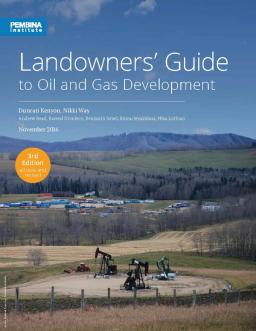
Alberta’s energy development landscape is a maze of regulations and complex relationships. The Landowners’ Guide to Oil and Gas Development provides advice on negotiating the best relationship possible between industry representatives who live and breathe this subject matter and property owners or communities that may be facing it for the first time. It also provides accessible advice on some of these complex questions:
Upstream, Downstream: Safeguarding Albertan headwaters, homes and wildlife habitat”, will promote responsible land-use by engaging Albertans in the 2015 North Saskatchewan Regional planning process. Recent floods clearly demonstrated that Alberta’s headwaters, which provide fresh water, diverse recreation opportunities, key wildlife habitat and important ecological services, need more careful protection.
Energy efficiency is an important contributor to the future success of Alberta and the sustainability of real estate in the province. The AEEA proposes to build on its past success by continuing to work towards the creation of ongoing energy efficiency programs in the province.
In the following pages, you’ll find a brief overview of some of the information landowners need about oil and gas development on or near their land. There are hundreds of different questions — and answers — with complex regulations and information to digest. The following questions are just a sample.
Traversing Terrain and Experience: The Atlas of the Battle River and Sounding Creek Watersheds tells a story of place. It serves as a tool to connect people to place by exploring the connections between landscape and experience throughout the Battle River and Sounding Creek watersheds of Alberta. The accompanying innovative and interactive Educator’s Guide provides teachers with an in-depth curriculum-connected series of lessons and activities to seamlessly fit into their classroom, making their students’ learning local and relevant.
This project is phase one of a project exploring best practices for recreation in Alberta. Phase one aim to understand Albertans’ views of nature and recreation and outdoor recreational activities. This project will be used to inform land use planning in Alberta such that the views and needs of all Albertans are used in achieving sustainable recreation and conservation planning.
The average person puts 340 litres of sewage through a private sewage system (septic system) every day. For a family of four living in a two-bedroom house, that amounts to 1,360 litres per day and just under half a million litres per year. The last Alberta census shows that rural residential landowners represent 14% of Alberta’s population. The decisions of those acreage owners about how to manage and maintain their septic systems have the potential to have a significant cumulative effect on the Alberta landscape.
Beyond Market-Based Land Values – Using a Long-term, Cumulative Effects Modelling Exercise to Measure Ecological Values of Sustainable Ranching“Buy land, they’re not making it any more.” ~ Mark Twain Mr. Twain’s sparse words, as usual, speak volumes, and bring immediately to mind what we value about land – our finite vistas, natural habitats, and open spaces; however, this finite resource also provides other essential values that are only more recently drawing our attention: the complex suite of ecosystem services that sustain life. Certainly in Alberta’s predominantly agricultural prairie region, land values are beginning to reflect these services (e.g., environmentally well-managed ranches are often more highly assessed); but, in order to more accurately and inclusively reflect the full suite of land values we need to a.) Measure these values (and thus, bring greater clarity to defining “well managed”), and b.) Use these measures to guide future management. Through a broad-scale cumulative effects modelling exercise in a largely rural agricultural (ranch/farm) area of southern Alberta, we will provide first steps to finding answers to these questions and the solutions to moving forward – the value of our land leaves us no choice.