Land Management
Land management involves the systematic and sustainable administration of land resources to optimize their use, conservation, and productivity while considering environmental, social, and economic factors.
Land Management
Land management involves the systematic and sustainable administration of land resources to optimize their use, conservation, and productivity while considering environmental, social, and economic factors.
A Smart Farm uses GPS, soil scanning and a number of other technologies connected to the internet to employ precision agriculture—that is, being selective with farm management techniques to increase the quality and quantity of food production.
Research at Olds College has determined at least three native wetland plants in Alberta—sedges, cattails and bulrushes—are “working very well” removing contaminants and excess nutrients from the water. “There’s no data that indicates what plants, what kind of contaminants or nutrients each plant takes up and how much the plants can take up at a time,” says Ruth Elvestad, research technician at Olds College Centre for Innovation.
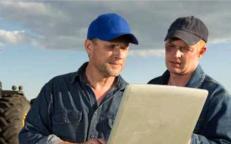
The Stettler Learning Centre is creating a series of podcasts and a website that are “part educational tool, part source of inspiration” aimed at Alberta producers who want to understand what they can do on the farm to help move toward a clean energy economy.

For Immediate Release, Calgary – Alberta’s deficit is high and might be growing. There are two solutions to fix that – either cut spending or raise new revenue. The School of Public Policy has launched the Alberta’s Fiscal Future program to study various options for getting us back on track.
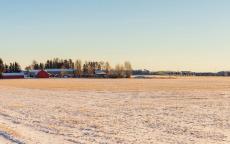
“Urban Alberta is spilling into rural,” says Brent Swallow, an environment and development economist. Too often, decisions about land designation are driven by short-term goals, he says. But there are long-term costs to development and to the “ecosystem services” that rural land provides for cities, such as clean air and water.

The goal of this project is to quantify the amount and value of the land that could be released for other uses, as well as the potential foregone capital and operating costs of providing and maintaining parking infrastructure. This new research report explores how Canada’s personal mobility systems are poised to be radically transformed by the convergence of four disruptive technology and business model innovations: vehicle automation, connectivity, electrification, and car sharing.
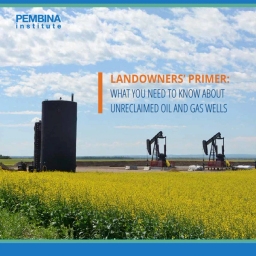
With support from the Alberta Real Estate Foundation, the Pembina Institute has published the Landowner’s primer: what you need to know about unreclaimed oil and gas wells to help those who are most impacted. Designed as a complementary follow up to our 2016 publication, the Landowners’ Guide to Oil and Gas Development , this primer addresses questions and examines problems landowners face when dealing with operators who are under financial strain and still have unreclaimed oil and gas infrastructure on landowners’ property.
The forested areas on lands are often overlooked for their values by many, but these forests and other treed areas often extremely valuable, holding values both in their ability to be sold as a product, and through natural functions that trees can provide while living. This document seeks to introduce you to major values and to help realise the potential that is in these areas.
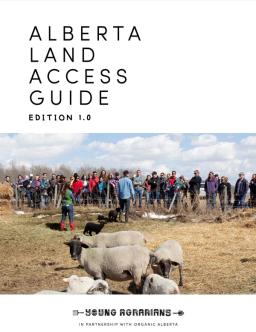
The purpose of this guide is to support new and landless farmers to choose a path toward accessing land. In researching and writing this guide, the driving question has been: how have new farmers secured land? There are several different options to consider from leasing and purchasing to community farms and incubator plots – each with its own set of pros and cons.
The final report of a study investigating the adoption of technological advancements in irrigation agriculture found irrigators are actively adopting these technologies, generating benefits for irrigators, the broader communities that depend on irrigation, and the environment. Often referred to as “precision agriculture”, the technologies improve crop yield and quality, as well as reduce farm inputs. Examples of such technologies are GPS systems, satellite imagery, auto-steer technology, and weather monitoring sensors.
Agricultural lands support numerous social, economic, and environmental benefits. In addition to making up an invaluable aspect of Alberta’s heritage and culture, the social benefits of agricultural lands include food security and valued viewscapes. In terms of economic benefits, agricultural lands enable significant contributions to employment and GDP.
Farmers and ranchers can play a pivotal role in building the low-carbon economy of the future. Especially in Alberta, home to one-third of Canada’s agricultural land and two important carbon sinks—grasslands and the boreal forest. The wildrose province also has some of the best solar and wind power resources in Canada.