Consumer Education
Consumer education involves empowering individuals with the knowledge and skills necessary to make informed decisions about real estate and their role as a homeowner, condo owner, landlord, tenant, or rural property owner.
Consumer Education
Consumer education involves empowering individuals with the knowledge and skills necessary to make informed decisions about real estate and their role as a homeowner, condo owner, landlord, tenant, or rural property owner.
This project builds on the Alberta Real Estate Association’s (AREA) 2016-2017 Standards of Professional Excellence report, supported by the Foundation. The 2016-2017 project allowed AREA to build meaningful metrics upon which to measure the Alberta consumer experience.
It is increasingly important that new and experienced mortgage brokers are fully prepared to provide the consumer with the best possible knowledge and advice. As an industry association with a strategic plan that includes a significant emphasis on education and professional development, AMBA is uniquely suited to provide mortgage broker candidates, new professionals, and existing industry professionals with the insight and knowledge—as well as real-world skills and experience—required to ensure that the public’s interests are being protected and indeed well served by the real estate industry. AMBA is dedicated to educating the industry to the highest of standards.
This project will implement proven education and support practices to newcomer and immigrant Albertans who have little experience and understanding of Albertan homes or the Canadian real estate industry. This project will educate immigrant and newcomer Albertan’s who are new or future homeowners on the structure of Albertan homes, how homes ‘work’, how to understand and sign up for energy services, and the typical operating costs associated with Albertan homes. This consumer education will ensure newcomers and immigrants have the information and education they need to make informed home-buying decisions. This project will ensure new and future Albertan homeowners are empowered and educated to understand and plan for affordable homeownership.
Energy efficiency is among the most cost-effective ways to reduce a homeowner’s ongoing monthly utility costs, and the most influential time to affect the efficiency of a home is during its initial design and construction. Decisions made during home design and construction impact not only the initial homebuyer, but all future owners. This project will leverage the launch of the Clean Energy Improvement Program in the province to demonstrate how it can be used to significantly increase the energy efficiency of new homes constructed. The successful demonstration could present an opportunity for all new buildings in the province (both multi-unit residential and commercial) to be built to a higher efficiency level for the same sticker price as a standard efficiency building – benefiting both the initial owner and all subsequent owners.
Supports the digitization of educational material, increases program accessibility, and connects local industry experts to consumers.
The Green Building Education Development project will provide a high-quality educational opportunity for Real Estate Professionals to learn best practices on green building standards. The intent is to equip Real Estate Professionals with the knowledge they can share as the front line of the industry with consumers, building owners, and property managers. As the demand for green building standards increases, so will the need for this type of training.

The goal of this project is to support the creation of sustainable, efficient, and resilient housing co-ops in Alberta. Despite minimal growth of new housing co-operatives in Alberta, a co-op model can effectively engage tenant-members in making decisions that provide affordable options, a range of community benefits, and be good stewards of the housing stock.
This project will prepare urban and rural communities in the South Saskatchewan Watershed for climate change in two ways. The project will provide an extreme weather events analyses necessary to adapt infrastructure and operations systems to cope with increasing weather stresses. Second, it will provide transition opportunities to renewable energy systems that provide community resiliency, energy security and price stability with a meaningful greenhouse gas management plan.
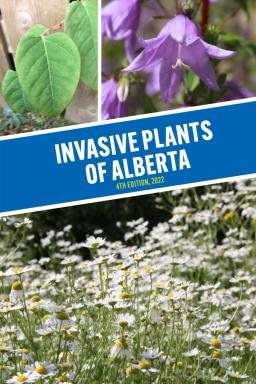
The Alberta Invasive Species Council updated their Invasive Plants of Alberta Guide. The new version of this guide includes provincial distribution maps, information on prevention initiatives, and indicates the species that are problematic in specific habitats. There are several invasive plant species that are particularly problematic in urban areas that homeowners and REALTORS® should be aware of. These can be a liability as landowners are responsible for controlling or eradicating prohibited noxious or noxious invasive plant species that persist on their property as per the Weed Control Act.
This project will update WellWiki.org data on more than 600,000 Alberta oil and gas wells; add new features to the website including township search function, inactive and abandoned wells, and municipal tax revenues related to oil and gas activity. It will also make available on WellWiki.org a version of the content developed as part of the Pembina Institute’s Landowners’ Guide to Oil and Gas Development and Primer.

Lakes and water bodies are a limited resource in Alberta and the demand for lake properties is high. The impact of significant development around water bodies combined with a changing climate is negatively affecting the physical, chemical, and biological characteristics of Alberta lakes. These factors also have an impact on real estate sales and property values.
This project uses data-driven approaches (e.g., machine learning) to evaluate the impact of the COVID-19 pandemic on Alberta’s real estate markets. The University of Alberta will collaborate closely with the REALTORS® Association of Edmonton so that the research aligns with industry stakeholder interests. The main objective is to analyse the impact of COVID-19 on: