Healthy Communities
Healthy communities are environments that prioritize and promote physical, mental, and social well-being through accessible healthcare, green spaces, affordable housing, and community engagement.
Healthy Communities
Healthy communities are environments that prioritize and promote physical, mental, and social well-being through accessible healthcare, green spaces, affordable housing, and community engagement.

The Sensitive Habitat Inventory Mapping (SHIM) project for Lac La Biche was initiated in 2016 to respond to community concerns expressed by the Stewards of the Lac La Biche Watershed, over the health of the lake. This project characterizes the physical and biological features of the lake’s foreshore so that sensitive areas can be identified and subsequently protected during shoreline development. The SHIM methodology was developed by Fisheries and Oceans Canada in British Columbia, and while it has been successfully incorporated into land use planning for several lakes there, the Lac La Biche SHIM project will be the first example of its use elsewhere in Canada.
After the devastating wildfires, Wood Buffalo (WB) has the opportunity to implement a process to build a more resilient community. This requires a community engagement process, to ensure ownership by the community. This proposal therefore, falls under the Community Innovation area and, aims at utilizing a strategic, comprehensive and innovative approach/tool – The WB Strategy Roadmap – to better understand the challenges facing the community and identify priority areas for the community’s recovery effort.
Lac La Biche is a large lake situated in the Boreal Mixedwood Ecoregion of northeastern Alberta. It has numerous bays and rocky offshore islands, as well as wide areas of shallow littoral habitat characterized by extensive submerged and emergent vegetation. The lake provides important habitat for many fish species, as well as colonial and migratory waterbirds and aquatic mammals. It supports sport and domestic fisheries and is a popular recreational destination for swimming, boating, fishing, hiking, and nature appreciation.
2017 is the Friends of Fish Creek Provincial Park Society’s 25th anniversary year. As such, the Society will be highlighting their achievements over the past 25 years and providing new and exciting ways to get involved in the Fish Creek Park community. By leveraging skilled staff and volunteers to provide outreach activities, hands on stewardship, engagement activities and social enterprise, a core of informed park users will be supported by a stable non-profit society. This will enable the Society to continue to improve the quality of life for Calgary families and support local real estate values far into the future.

The Board of Governors of the Alberta Real Estate Foundation approved $353,500 in community investment projects at their recent meeting.
The Board of Governors of the Alberta Real Estate Foundation approved $160,000 in community investment projects at their recent meeting on June 18, 2015.
The Board of Governors of the Alberta Real Estate Foundation approved $410,000 in community investment projects at their recent meeting on March 6th, 2014.
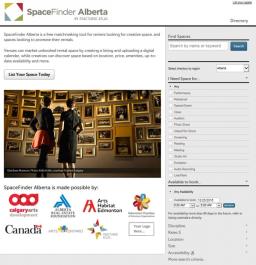
SpaceFinder Alberta is a free matchmaking tool for renters looking for creative space, and spaces looking to promote their rentals.
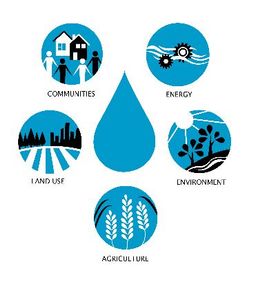
A nexus is the place where points intersect, linking many different parts of a system together. Water is the nexus between food, energy, and people. Water is required to meet the demands of our growing population, to maintain and improve environmental health, and to support the production of food and energy. As the availability of water changes and our population grows, meeting the demands in the Nexus will become increasingly challenging.
The Board of Governors of the Alberta Real Estate Foundation approved $279,000 in community investment projects at their recent meeting on June 13th, 2014.
The Board of Governors of the Alberta Real Estate Foundation recently approved $267,500 in community investment projects at their recent meeting on March 21st, 2014.
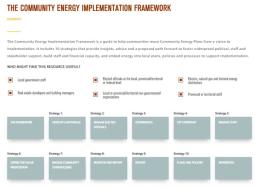
Communities – the places where we live, work and play – account for 60% of energy use in Canada, as well as over half of all greenhouse gas emissions (GHGs). In other words, when we invest, plan and implement effectively for Smart Energy Communities, we can have a direct impact on addressing Canada’s energy and GHG challenges. A Community Energy Plan is a tool that helps communities define priorities around energy with a view to improving efficiency, cutting emissions and driving economic development.