Land Management
Land management involves the systematic and sustainable administration of land resources to optimize their use, conservation, and productivity while considering environmental, social, and economic factors.
Land Management
Land management involves the systematic and sustainable administration of land resources to optimize their use, conservation, and productivity while considering environmental, social, and economic factors.
Lac La Biche is a large lake situated in the Boreal Mixedwood Ecoregion of northeastern Alberta. It has numerous bays and rocky offshore islands, as well as wide areas of shallow littoral habitat characterized by extensive submerged and emergent vegetation. The lake provides important habitat for many fish species, as well as colonial and migratory waterbirds and aquatic mammals. It supports sport and domestic fisheries and is a popular recreational destination for swimming, boating, fishing, hiking, and nature appreciation.

On December 17th, nine families received keys to their Habitat for Humanity Home at Neufeld Landing, the largest Habitat Build in Canadian history.
It’s every homeowner’s nightmare: You buy a home, move in, then find out there’s an abandoned gas well beneath, leaking and contaminating your property. Think it can’t happen to you? It can. According to the Energy Resources Conservation Board in November 2012 over 150,000 abandoned well sites dotted the Alberta landscape, making it essential that buyers do their homework.
The Alberta Riparian Habitat Management Society (Cows & Fish) and the Alberta Low Impact Development Partnership Society (ALIDP) invite you to attend our From Street to Stream ½-day workshop.
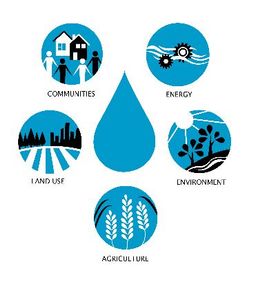
A nexus is the place where points intersect, linking many different parts of a system together. Water is the nexus between food, energy, and people. Water is required to meet the demands of our growing population, to maintain and improve environmental health, and to support the production of food and energy. As the availability of water changes and our population grows, meeting the demands in the Nexus will become increasingly challenging.
The Yellowstone to Yukon Conservation Initiative (Y2Y) is a joint Canada-U.S. not-for-profit organization that connects and protects habitat from Yellowstone to Yukon so people and nature can thrive. They are the only organization dedicated to securing the long-term ecological health of this entire region.There are many conservation initiatives underway in this vast region. One such initiative is to look at the establishment of a park or protected area in the area known as “The Bighorn”. This area is made up of many uses, including industrial (coal, logging), parks, wilderness areas and crown land. It’s an extremely important area for many reasons; habitat for grizzly bears and other large mammals and it is also part of the headwaters for the North Saskatchewan River –Edmonton’s main drinking water supply.Y2Y contracted NRG Research Group and the Praxis Group to undertake a poll to gauge opinions and attitudes toward the establishment of a park in this area. Although Y2Y has no actual jurisdiction for park establishment, the information is being gathered to help decision-makers understand how the various options might play out.
Alberta’s energy development landscape is a maze of regulations and complex relationships. The Landowners’ Guide to Oil and Gas Development provides advice on negotiating the best relationship possible between industry representatives who live and breathe this subject matter and property owners or communities that may be facing it for the first time. It also provides accessible advice on some of these complex questions:
In the following pages, you’ll find a brief overview of some of the information landowners need about oil and gas development on or near their land. There are hundreds of different questions — and answers — with complex regulations and information to digest. The following questions are just a sample.

Lac La Biche is the seventh largest lake in Alberta, with importance to the local economy and culture. Local and provincial government, in collaboration with lake stakeholders, created a watershed management plan for Lac La Biche in 2009, but little has been done to date to implement it. That is soon about to change, with the formation of the Stewards of the Lac La Biche Watershed, a group of community stakeholders committed to implementing the monitoring, outreach and stewardship recommendations in the plan. With the support of the Alberta Real Estate Foundation, the newly formed group will be able to take on activities that will increase publicly available science about the lake and provide means of disseminating that information to stakeholders. Since the project start date, a group of steering committee members has formed to work out the mechanics of the group so that it will make the broadest and most enduring impact on protecting the lake values.
This project was catalyzed by Operation Grassland Community, with a focus on building a dynamic simulator that could track cattle dynamics and explore alternative cattle production strategies in Alberta against a range of economic, social, and environmental factors. This report is a written summary that accompanies the Alberta Livestock Alces Online (ALAO) simulator (http://www.online.alces).
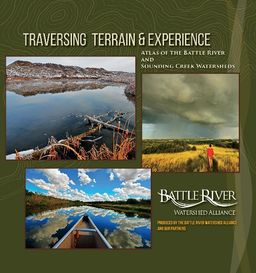
The land that drains into the Battle River and Sounding Creek. These watersheds provide a backdrop for the unfolding lives lived full of courage and tragedy, heroism and heartbreak. Over time, this landscape has witnessed the retreat of glaciers, Indigenous peoples and great herds of bison, the arrival of the Fur Trade and European settlers, the ploughing of fields, and the creation of modern cities. This book tells these stories, and many more.
The Canadian Parks and Wilderness Society Southern and Northern Alberta Chapters worked with the Praxis Group™ (Praxis) to undertake a survey of Albertans to better understand the public’s behaviour, attitudes and opinions related to outdoor recreation and use of public lands. The survey instrument was developed jointly by CPAWS and Praxis and reviewed by selected stakeholders in government, academia, nonprofit organizations and industry.