Land Stewardship
Land stewardship involves responsibly managing and conserving natural resources, ecosystems, and landscapes to sustain their ecological health and diversity for current and future generations.
Land Stewardship
Land stewardship involves responsibly managing and conserving natural resources, ecosystems, and landscapes to sustain their ecological health and diversity for current and future generations.
The Welcome to the Lake Program engages realtors as healthy-lake stewards to help generate awareness about healthy-lake practices that will protect the lake and support a resilient ecosystem and strong community. This program provides training and resources for Alberta realtors selling properties in watersheds in Alberta. The professional development themes include watershed basics for maintaining a healthy lake, low impact development solutions, and lake wise landscaping with in-person training options for realtors selling in the Pigeon Lake watershed and online options for realtors selling properties in other watersheds across the province. To share their knowledge, this program offers realtors with a welcome stewardship package that they can provide to new home owners.
Updating the Identification Guide for Alberta Invasive Plants – Invasive species threaten Alberta’s environment and economy. They outcompete the native species that provide food and habitat for wildlife; some pose risk to public safety; others are problematic in crop fields, resulting in reduced yields; and other species like Japanese knotweed exhibit such vigorous growth that they can break through concrete building foundations. The Alberta Invasive Species Council will to work with local municipalities and the Alberta Association of Agriculture Fieldmen to update and reprint the widely popular Identification Guide to Invasive Plants in Alberta.The new version of this guide will include provincial distribution maps, information on prevention initiatives, and will also indicate the species that are problematic in specific habitats (e.g., urban areas, farmland, in grassland ecosystems forests, etc.). There are several invasive plant species that are particularly problematic in urban areas that homeowners and realtors should be aware of. These can be a liability as landowners are responsible for controlling or eradicating prohibited noxious or noxious invasive plant species that persist on their property as per the Weed Control Act.

The Green Communities Guide is an essential tool to help communities plan and implement nature-based solutions and strategies to conserve water, protect water quality, preserve agricultural land, and protect critical open spaces and wildlife habitats.
Rural properties benefit from woodlots and shelterbelts (eco-buffers) by reducing possible forest fire risks, reducing soil erosion and wind impacts on buildings, and enhances overall aesthetics. Proper woodlot management ensures the health of forested lands and increases the value of the land.
Assisting Communities manage development while conserving valuable natural assets – This project will update and re-print a highly successful and impactful educational and awareness resource called the Green Communities Guide (GCG), a resource that has resonated deeply with the municipal and stewardship community. This essential update to the GCG will enable us to offer an enhanced resource to realtors, municipalities, land-use planners and developers to help communities plan and implement strategies to conserve valuable natural assets in the face of development and expanding communities.
Alberta’s 2003 Water for Life strategy marked a major shift in the management of Alberta’s water resources to better enable shared responsibility and environmental stewardship. The province’s 11 Watershed Planning and Advisory Councils (WPACs) cover the entire province and were created as the main mechanism to foster collaboration at the watershed level. Given that municipal governments play a central role in the management of land and water, they are crucial WPAC partners. In collaboration with four WPACs, this study will evaluate the effectiveness of joint WPAC-municipal initiatives that enable land stewardship and planning, water management, and ecosystem resiliency for sustainable communities in Alberta.
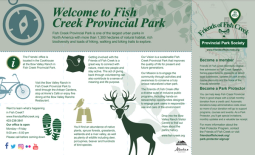
Fish Creek Provincial Park is one of the largest urban parks in North America with more than 1,300 hectares of natural habitat, rich biodiversity, and loads of hiking, walking, and biking trails to explore.

The Canadian Parks and Wilderness Society (CPAWS) is Canada’s only nationwide environmental charity dedicated solely to the protection of our public land and water, which together make up more than 90 per cent of Canada by area. CPAWS Southern Alberta chapter (SA) works to protect Alberta’s parks and wilderness areas, and educate and inspire Albertans to get outside and engage in stewardship. We work with Albertans to establish and protect parks and wilderness areas from Red Deer south to the Alberta border, including well-known areas such as Kananaskis, Castle and Bighorn.
The project will educate and assist rural landowners in improved management of their forested lands. The project will assist the real estate industry in understanding and promoting increased property values through improved management of rural forested lands by current and future owners. The project will assist in increasing property values of rural lands.
This project is about stories, science, and using creative communications to inspire people in central Alberta to take improve their land-use and practices to protect watershed health and enhance real estate value and livability . We will engage people in central Alberta to hear their real-world water and land-based stories, complement these stories with a suite of science based messages, and ultimately develop a “Story of the Red Deer River watershed” to be shared widely using creative communications and digital media. Imagine National Geographic meets Central Alberta – this project is a bit like that, in that it will harness the power of stories and compelling visuals to raise awareness and encourage action around key water and land-use issues.
ALUS Canada will collect, synthesize, and articulate the current and potential value proposition of the ALUS program in Alberta to streamline program delivery and achieve more environmental restoration and conservation. This project will strengthen the coordination within ALUS and evaluate its programs by working with partner municipalities, analyse their program success and failures and use the information to improve the project delivery to improve respond to the growing interest in ALUS in Alberta. This work will clearly show how ALUS helps build more resilient communities by maximizing the value of marginal land on agricultural operations that are then better able to mitigate risk of extreme weather events.
With support from the Alberta Real Estate Foundation, the Pembina Institute has published the Landowner’s primer: what you need to know about unreclaimed oil and gas wells to help those who are most impacted. Designed as a complementary follow up to our 2016 publication, the Landowners’ Guide to Oil and Gas Development , this primer addresses questions and examines problems landowners face when dealing with operators who are under financial strain and still have unreclaimed oil and gas infrastructure on landowners’ property.